
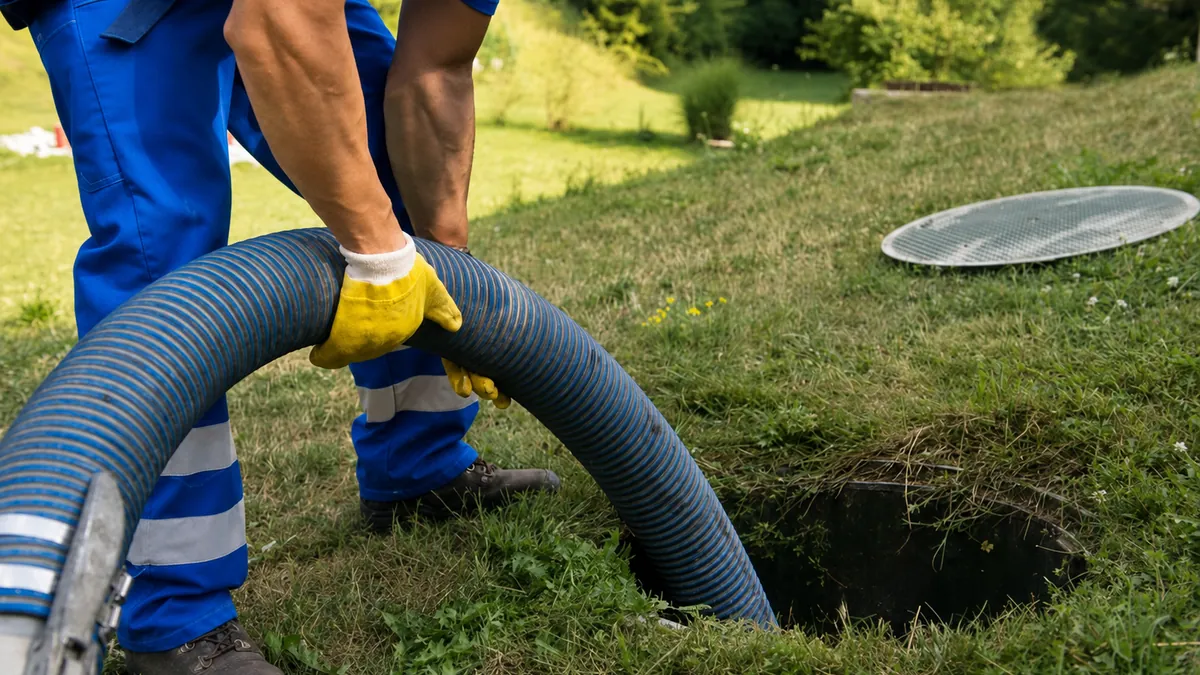
Is there a septic tank pumping service near me in Ocala?
Yes, and the real question behind a near-me search is which company to call. Florida DEP's answer to who may do the work is narrow: a registered septic tank contractor or a state-licensed plumber, holding a current service permit. So the filter that matters on a septic tank pumping near me search is not distance, it is whether the company holds a current state registration, and that register is public and free to search. This site is an information and matching resource for Ocala and the Marion County towns around it, including Belleview, Dunnellon, Summerfield, Citra, Silver Springs, Ocklawaha and Reddick. The pumping itself is done by an independent local contractor who works your county, not by this site.
Two things worth knowing before you book. A septic pumping near me search and a septic system pumping near me search return the same trade doing the same visit, so the wording you used does not change the job. And a septic tank pump out near me request here is a planned appointment: this service routes routine, scheduled work only, so an active backup needs a local company called directly.
Who provides septic tank service in Ocala and Marion County?
Independent, state-registered companies, and the register is public and free to search. Florida DEP's public license data export listed 23 active registered septic tank contracting businesses with a Marion County business address on October 17, 2026, out of 617 active businesses statewide (FDEP public license data, read 2026-10-17). Registration is the credential that matters on a septic tank service search around Ocala: Florida registers septic tank contractors under Part III of Chapter 489, Florida Statutes, rather than licensing them, and DEP says a registered contractor or a state-licensed plumber may pump a tank with an appropriate active service permit. Our registered septic companies in Marion County guide lists all 23 with their authorization and registration numbers, so you can check a company before you book. This site is an information and matching resource; the work is done by an independent local contractor.
What does a septic tank service visit include?
A routine visit is a pump-out plus a condition check, and the two happen on the same trip. Whether the company calls it septic system service, septic tank pumping, septic tank cleaning, or a pump-out, the core job is removing the sludge and scum the tank has separated out of your wastewater. While the tank is open, your contractor can also see the parts nobody can inspect any other way: the inlet and outlet baffles, the lids and risers, the effluent filter where one is fitted, and the sludge and scum levels that set your next interval. The EPA describes the same visit from the provider side: the service provider inspects for leaks, examines the scum and sludge layers, and should note the repairs completed and the tank condition in your system's service report (EPA septic care, read 2026-10-17). Ask for that report and keep it. It is the record that tells the next contractor what your tank looked like last time.
Is septic system pumping the same as septic tank pumping?
Yes, for the routine visit both phrases describe. The tank is the part a pump-out empties, and the drain field is not emptied by that visit; it is protected by taking the solids out of the tank before they reach it. Homeowners around Ocala search both ways, and the local companies advertising septic system service and septic tank pumping are quoting the same truck and the same visit. Where servicing a system means more than a pump-out is on a mechanized or an aging system, covered below.
Is septic tank cleaning the same as pumping?
In everyday use in Ocala, yes. Local companies advertise pumping, cleaning, pump-outs and tank emptying for the same visit, and homeowners searching any of those words are after the same job. The one distinction worth asking about is that some companies reserve "cleaning" for a more thorough visit that also washes down the tank walls and works out compacted solids, which matters on a tank that is badly overdue. Ask what the visit includes before you book it.
Is a septic pump the same as septic pumping?
Usually, and the exception is worth two sentences. Around Ocala, "septic pump", "septic pumping near me" and "septic pump near me" nearly always mean a tank pump-out, which is the service on this page: a truck removes the sludge and scum the tank has separated out, and the contractor reads the levels while the lid is off. The other meaning is hardware. Some Marion County systems are built with an effluent or lift pump that moves effluent out to the drain field where gravity will not carry it, and that pump runs on a float switch. A pump that runs constantly, trips its alarm, or moves nothing is a septic repair, not a pump-out, and pumping the tank will not fix it. If you are not sure which one you have, say so on the form and the contractor sorts it out on site.
What is a septic tank pumper in Ocala?
In Marion County the word carries two meanings and only one of them hires anybody. A septic tank pumper is most often the company or the operator who pumps the tank: the same trade, the same visit, and the same credential as everything else on this page. Florida DEP answers the credential question directly, saying that registered septic tank contractors, and state-licensed plumbers, may pump septic tanks with an appropriate active service permit from their local county health department. The second meaning is equipment. A septic pumper truck, sometimes searched as a septic tank pumper for sale, is the vacuum tanker itself, and that is a trade purchase rather than a homeowner one.
So a septic tank pumper search, a septic pumper search and a septic tank pumping search in Ocala return the same work. What changes the outcome is not the wording, it is whether the company holds a current state registration, which is public and free to check on the Florida DEP register. Our list of registered septic contractors in Marion County is built from that register. If the tank turns out not to be the problem, the next step is usually drainfield replacement rather than a second pump-out.
Who is allowed to pump a septic tank in Florida?
A registered septic tank contractor or a state-licensed plumber, and they need a current service permit as well. Florida DEP puts it plainly in its septic contracting FAQ: "Registered septic tank contractors (and state-licensed plumbers) may pump septic tanks with an appropriate active service permit from their local county health department" (who may pump a septic tank, Florida DEP, read 2026-10-17). The same page says a homeowner may do septic work only on his or her own owner-occupied single-family home, and that offering the service without a registration and a business authorization can draw citations and fines.
Two practical notes for Marion County. First, the word is registration, not license: Florida registers septic tank contractors under Part III of Chapter 489, Florida Statutes, and the state register is public, free, and takes about two minutes to search. The registered septic companies in Marion County guide linked above carries the current register as a table and shows how to run the check yourself, and it works the same way for a pumping company. Second, DEP notes that OSTDS permitting in Marion County is now being addressed by the Department of Environmental Protection, where the department's general statement is that county health department environmental health sections handle it (Marion County OSTDS permitting, Florida DEP, read 2026-10-17), so if a permit question comes up during a pump-out, confirm the current path with DEP rather than assuming.
How often should a septic tank be serviced?
The EPA gives two intervals for septic system service and they are not the same number. The average household system should be inspected at least every three years by a septic service professional, and the tank pumped every three to five years (EPA septic care, read 2026-10-17). The EPA's maintenance answers put the inspection interval slightly tighter, at every one to three years, with pumping every three to five (EPA septic maintenance, read 2026-10-17). Alternative systems with electrical float switches, pumps or mechanical components should be inspected more often, generally once a year, and the EPA says a service contract matters on those because they have mechanized parts.
Four things move the pumping interval, per the EPA: household size, total wastewater generated, volume of solids in wastewater, and septic tank size. A garbage disposal, heavy laundry loads, or a rental with rotating occupants pushes the cycle shorter. A small household in a large tank pushes it longer. Nothing on that list is guesswork about your habits, which is why a contractor who has opened the tank can give you a real number and a calendar cannot.
Do I need a septic maintenance service near me?
It depends which system you own, and for two Florida system types the answer is set by statute rather than preference. On an aerobic treatment unit, section 381.0065(4)(v)1., Florida Statutes, says the owner "shall maintain a current maintenance service agreement with an aerobic treatment unit maintenance entity permitted by the department", and that the maintenance entity "shall inspect each aerobic treatment unit system at least twice each year and shall report quarterly to the department". Subsection (4)(v)4. adds that the owner "shall obtain a system operating permit from the department" and allow the department to inspect the system at least annually. Engineer-designed performance-based systems carry the same twice-a-year inspection and quarterly reporting requirement at subsection (4)(l)3. (section 381.0065, Florida Statutes, read 2026-10-17).
What that changes about a septic maintenance near me search around Ocala is who you are hiring. On those two system types the company is not only emptying a tank, it is the entity signing the maintenance agreement the statute requires, so ask which department permit it holds before you sign anything. If you are not sure which system you own, ask the contractor to confirm the type at the visit, and confirm the current permitting path with DEP, since the department states that permitting in Marion County is now being addressed by DEP.
Can a septic tank go 20 years without being pumped?
It is far outside the EPA guidance, and the EPA gives a measured trigger rather than a date. A tank needs pumping if the bottom of the scum layer is within six inches of the bottom of the outlet, if the top of the sludge layer is within 12 inches of the outlet, or if more than 25 percent of the liquid depth is sludge and scum. Those are the numbers a contractor actually reads on site. The reason they matter is not the tank itself: once solids build past the outlet they carry into the drain field and clog it, and a clogged field is the most common reason Marion County systems need drain field repair or replacement. A few hundred dollars of routine service is the cheapest insurance a septic owner can buy against a five-figure repair.
What eats sludge in a septic tank?
The tank does part of the work, and it never does all of it. The EPA describes the septic tank as digesting organic matter and separating floatable matter and solids from the wastewater, holding the wastewater long enough for solids to settle to the bottom as sludge while oil and grease float to the top as scum, with compartments and a T-shaped outlet stopping both from traveling into the drainfield. What settles out stays there. That is why the EPA guidance is periodic pumping and not a product. Florida DEP reviews the composition of items sold for use in septic systems to confirm they will not interfere with the system, and states that the review is not an approval and does not certify effectiveness.
Should you use a septic tank additive?
The EPA's position is that you do not need one. It says it does not make recommendations on individual septic system products, and that the commercially available microbiological and enzyme additives promoted to reduce sludge and scum are not necessary for a septic system to function properly when treating domestic wastewater. It advises caution because additives may decrease the performance of the drain field that treats the water leaving your tank, and says not to use additives made of organic solvents or strong alkali chemicals, which it describes as a potential threat to soil structure and groundwater (EPA septic maintenance, read 2026-10-17). Some states and localities set their own additive rules, and the EPA points homeowners at their local permitting authority for those.
How much does septic system service cost in Ocala?
About $250 to $600 for routine work in Florida, from published cost ranges reviewed April 2026. These are planning ranges, not a quote, and only the contractor prices your actual tank.
What moves it up: a lid that has to be located and dug out, a deep or oversized tank, a long hose pull from where the truck can park, a tank so overdue that compacted solids have to be broken up, and any add-on such as fitting a riser so the next visit does not need digging. What keeps it at the low end: an accessible lid at or near grade, a tank pumped on schedule rather than years late, and booking it as planned work instead of a callout. Our Florida septic cost guide carries this range beside the bigger-ticket numbers with its sources, so you can see what a deferred pump-out eventually costs instead.
Septic tank pumping prices in Ocala are quoted per job rather than from a city rate card. If you are looking for the cheapest septic tank service in Ocala, the two honest levers are keeping the tank on its normal cycle, since an overdue tank that needs the lid dug out or compacted solids broken up costs more than routine work, and getting more than one quote from registered contractors. Treat a price far below every other quote with care: hauling the septage away for lawful disposal is part of what a pump-out costs.
The EPA frames the decision as arithmetic rather than a price. It puts regular septic system maintenance at $250 to $500 every three to five years and sets that against repairing or replacing a malfunctioning conventional system at $5,000 to $15,000, with alternative systems costing more (EPA septic maintenance, read 2026-10-17). Those are national figures rather than Ocala quotes, and the size of the gap is the argument for booking service on schedule.
Where does the septage go after your tank is pumped?
Away for lawful disposal, and not onto land. Florida defines the waste removed from a tank as septage, "a mixture of sludge, fatty materials, human feces, and wastewater removed during the pumping of an onsite sewage treatment and disposal system", at section 381.0065(2)(p), Florida Statutes. Subsection (6) of the same section is headed Land Application of Septage Prohibited and reads: "Effective January 1, 2016, the land application of septage from onsite sewage treatment and disposal systems is prohibited." Hauling and lawful disposal are part of what you are paying for on a pump-out, which is worth knowing when one quote is far below every other one you get. Ask any contractor where the load goes, and check current requirements with FDEP.
Which Marion County systems need more than a pump-out?
Two kinds, and both are common around Ocala. The first is a mechanized system: aerobic and advanced treatment units have moving parts, and the EPA says systems with electrical float switches, pumps or mechanical components should generally be inspected once a year under a service contract. The second is an older system. The EPA says pumps and controls often need replacing every 10 to 20 years, that a drain field more than 25 to 30 years old can develop a thickened biomat that reduces its ability to discharge wastewater into the ground, and that a system past 25 to 30 years is worth planning an upgrade for before it becomes an emergency (EPA septic maintenance, read 2026-10-17). If yours is in that band, say so on the form, so the septic system pumping visit is booked as a condition assessment rather than only a tank empty.
Planned septic tank service, not 24 hour emergency response
This page covers routine, scheduled septic tank service: pumping and maintenance booked in advance. It is not an emergency line. If you are searching for 24 hour septic tank service in Ocala because sewage is backing up into your home right now, contact a local septic company directly.
How a septic tank pumping service gets quoted here
Tell us about your tank using the form below. Septic service in Ocala and the rest of Marion County is priced on what your tank actually needs, which is why the figures above are planning ranges and not quotes. The request goes to a local contractor who pumps the tank, checks its condition, and gives you a free, no-obligation quote first.
Sources and where to verify
- US EPA: How to care for your septic system
- US EPA: Why maintain your septic system
- US EPA: How septic systems work
- US EPA: Resolving septic system malfunctions
- Section 381.0065, Florida Statutes (septage definition, land application prohibition, aerobic and performance-based maintenance agreements)
- Florida DEP: product composition and additives
- FDEP OSTDS permitting FAQ
- FDEP: Septic Contracting Frequently Asked Questions (who may pump a septic tank)
- FDEP Onsite Sewage Program (Marion County permitting)
Local details last reviewed August 26, 2026.